Conflicting Cosplay References: Decide Which Image Should Guide Your Purchase
Promotional images, scene screenshots and fan illustrations can show different versions of the same costume. Establish a primary reference, document conflicting clothing details and decide which differences you can accept before committing to a purchase.
You have chosen your character, identified the outfit you want and started collecting reference images. Then you notice a problem: the promotional artwork shows one clothing detail, a screenshot from a scene shows another and a fan illustration presents a third interpretation. Which image should guide your purchase? Trying to combine every visible detail can produce a costume brief that no single reference actually supports. The better approach is to establish a clear reference hierarchy before comparing products. Choose one primary image that represents your intended recreation, record secondary references separately and evaluate each important clothing feature against that hierarchy. This gives you a practical purchasing decision instead of an increasingly complicated collection of conflicting ideas.
Choose the primary reference before evaluating costumes
Begin by identifying the exact appearance you want to recreate. You should already know the character and intended outfit; the remaining task is deciding which representation of that appearance controls your clothing choices.
Collect the images you are considering and identify their sources in your own notes. One might be a promotional image, another a screenshot from a fictional scene and another a fan-created illustration. These references can all be useful, but they do not automatically describe one identical design.
Select one image as your primary reference. This is the image against which you will evaluate the main costume. Choose it because it best represents the appearance you personally intend to recreate, rather than because it contains the greatest number of decorative details.
Keep the remaining images as secondary references. They can provide inspiration or help you understand alternative interpretations, but they should not override the primary image without an explicit decision. If you change your primary reference later, record that change and revisit any purchasing decisions that depended on the earlier choice.
Write a short reference statement that names the character, intended appearance and primary image. This prevents a familiar character name from becoming an excuse to combine unrelated clothing arrangements.
- Primary reference: the controlling image for your intended recreation.
- Secondary reference: additional inspiration that does not automatically change the design.
- Unselected reference: an image you have considered but decided not to use for this purchase.
- Reference change: an intentional decision to replace the primary image and review the affected requirements.
Create a feature-by-feature conflict register
Do not compare the images only by looking at the complete outfit. Break the clothing into identifiable areas so you can see exactly where the references disagree. Useful categories include neckline, sleeves, outer layer, lower garment and accessories.
For every category, record what the primary reference shows and what each secondary image appears to show. Describe the visible difference in neutral language. For example, write that the neckline arrangement differs rather than declaring one image incorrect without establishing which design you intend to reproduce.
Give every difference one of three statuses. Essential means you have decided that the detail must agree with your primary reference. Acceptable means you are willing to use a different interpretation without losing the identity of your intended outfit. Unresolved means you do not yet know which version you want or whether the available product information can establish the detail.
The distinction matters because not every disagreement should stop a purchase. An optional decorative difference can remain an accepted adaptation. An unresolved essential feature, however, is a purchasing dependency. You should not quietly replace it with whichever version happens to appear in a product photograph.
Keep the register short and specific. If a detail does not affect your intended appearance, there is little value in turning it into another essential requirement. Conversely, if you would reject the costume without a particular clothing arrangement, record that requirement clearly.
- Feature: identify the clothing area.
- Primary observation: describe what the controlling reference shows.
- Secondary observation: record the conflicting interpretation.
- Decision status: essential, acceptable or unresolved.
- Purchasing consequence: proceed, accept an adaptation or pause for clarification.
Compare costume listings without mixing reference versions
Once your primary reference is established, evaluate each potential costume against that image alone. Keep secondary inspiration visible in your notes, but do not allow an attractive detail from another interpretation to become an unrecorded requirement.
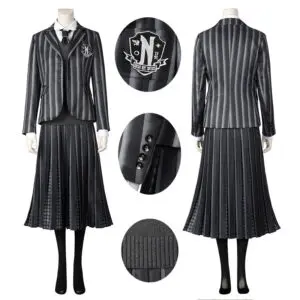
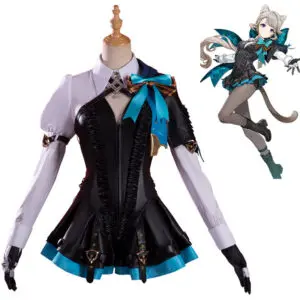
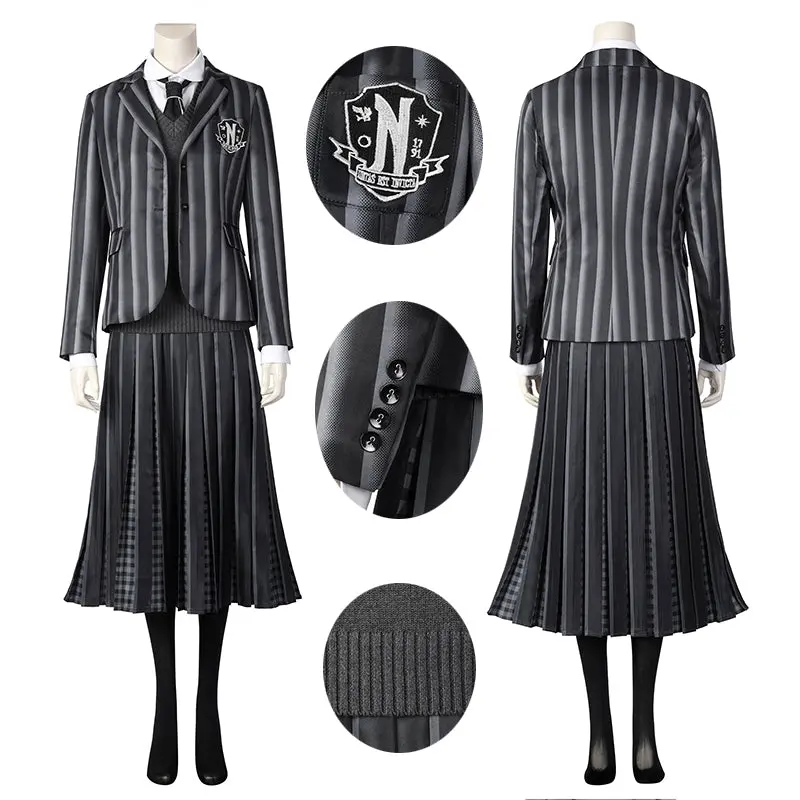
The HEROCOS The Addams Family Wednesday Cosplay Costume Nevermore Academy School Uniform Halloween Outfit is an illustrative costume listing for a Wednesday-focused purchasing comparison. The HEROCOS Genshin Impact Lynette Cosplay Costume Magician Assistant Dress Halloween Party Suit is another character costume listing. Their titles identify the respective products, but neither title establishes how its pictured clothing corresponds to a particular reference image.
For your chosen listing, compare the overall clothing arrangement first. Then work through the individual features in your conflict register. If an essential detail cannot be established from the available product photographs, formulate a specific enquiry rather than asking a general question about accuracy.
For example, ask whether the neckline shown in the selected product photographs corresponds to the neckline in your primary reference. If the back of the clothing is important, ask for a view that allows you to assess that area. Keep the selected listing and the relevant reference together so that the question concerns the exact purchasing candidate.
Do not let wigs, footwear or props distract you from an unresolved main-clothing requirement. Supporting items should be considered after you have established whether the costume itself is an acceptable candidate.
Worked hypothetical example: Wednesday and three conflicting images
Initial situation: A shopper wants to recreate Wednesday Addams in a Nevermore Academy uniform. They have three references: a particular promotional image, a screenshot from a fictional scene and a fan-created illustration. The images show different styling details, and the shopper initially considers combining the most appealing features from all three.
Their initial status is reference conflict unresolved. They have selected the character and general outfit, but have not established which image should control the purchase. The collar arrangement and overall clothing arrangement are important to their intended recreation, while a decorative difference in the fan illustration is less important.
They create a conflict register. The promotional image becomes the primary reference. The scene screenshot and fan illustration become secondary references. The collar and overall clothing arrangement receive essential status. The decorative difference from the fan illustration is classified as acceptable. Any remaining detail that they cannot yet evaluate is recorded as unresolved rather than silently added to the design.
They then evaluate the HEROCOS The Addams Family Wednesday Cosplay Costume Nevermore Academy School Uniform Halloween Outfit against the primary reference. Their first review of the available product photographs does not settle one essential collar detail, so they contact the seller with the exact question and identify the primary reference they are using.
New information: In this hypothetical example, the seller provides additional clarification and a relevant view that allows the shopper to establish that the essential collar and overall clothing arrangement meet their chosen visual requirements. The optional decorative difference remains an accepted adaptation.
Resulting status: The primary reference is settled, both essential clothing requirements have been clarified and the remaining difference is consciously accepted. The shopper no longer needs to combine details from competing images.
Definite decision: They proceed with the Wednesday costume purchase because the essential requirements have been adequately clarified. If the collar information had remained unresolved, their decision would instead have been to wait rather than purchase on an assumption.
Turn unresolved differences into a clear purchasing decision
Review the conflict register before placing an order. Every essential feature should have a clear outcome: established as acceptable against the primary reference, or still unresolved. Do not treat a general product description as confirmation of a particular visual detail.
Use three possible purchasing outcomes. Proceed when the essential requirements have been adequately established. Accept an adaptation when a difference is genuinely optional and you are comfortable with it. Wait when an essential feature remains uncertain and could change your decision.
If you decide to change the primary reference, do so deliberately. A fan illustration might become your preferred final design, for example, but that means revisiting the essential features and comparing the product against the newly selected image. It is not simply an additional detail to add to the original brief.
Keep the completed register with your shopping notes. It records why you selected a particular reference, which differences you accepted and which questions affected your decision. That makes it easier to maintain a consistent costume direction even when you encounter more artwork or product photographs later.
The aim is not to eliminate every difference between every image. It is to make sure that your purchase reflects one intentional design, with any adaptations chosen consciously rather than created by conflicting references.
EXPLORE THE COSTUMES
Mentioned in this guide
View the current options, size information and selected price on each product page.