Cosplay Shopping with a Friend: Who Gets to Approve Each Purchase?
Shopping for a paired cosplay does not mean every purchase needs everyone's permission. Build a purchase-authority matrix to distinguish personal costume choices from shared visual dependencies, record who must approve each decision and reopen only the purchases affected by a change.
Shopping for a cosplay with a friend can create an unexpected problem: when does a shared creative project give someone else a say in your purchases? Two people might be planning a paired photograph, a connected character presentation or a larger group concept, but that does not mean every clothing decision belongs to everyone. One person's main costume might be completely independent, while another purchase could depend on a visual element both people have agreed to create. Treating all purchases as joint decisions can make a simple project unnecessarily complicated. Treating every purchase as individual can create disagreements when someone buys an item that another person's plans depend on. The solution is a purchase-authority matrix. Assign each proposed purchase to an individual, a shared dependency or a joint approval category. Then record exactly who has authority to approve it and what can happen next.
Start with the costume decisions each person controls
Begin by listing the principal costumes each participant is considering. Record the intended character, the exact costume listing and the person responsible for selecting it. Keep each person's main clothing decision separate from the shared creative idea.
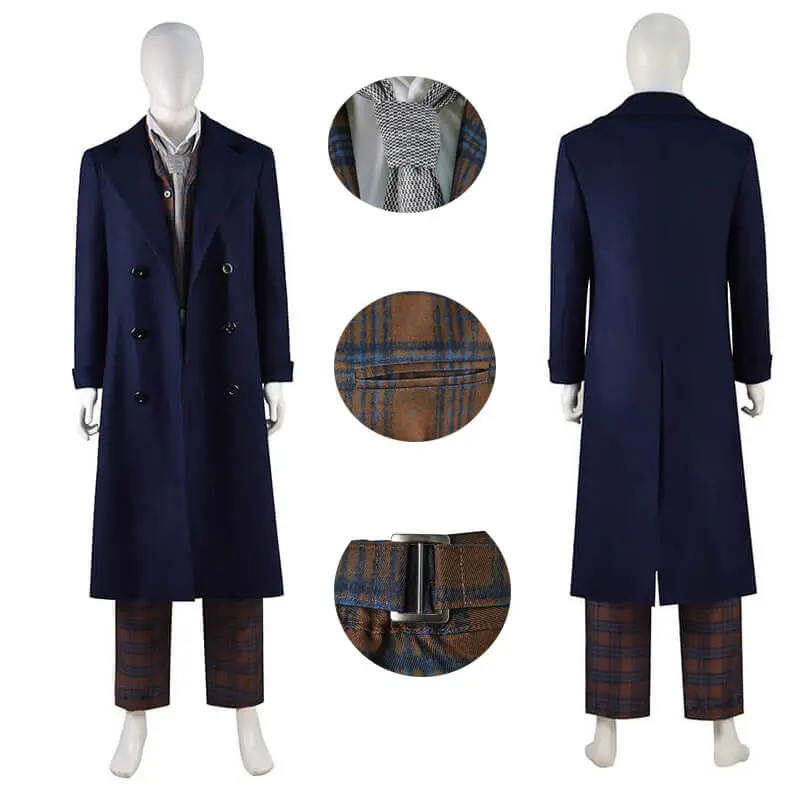
For example, two friends might consider the HEROCOS 14th Doctor Cosplay Doctor Who Fourteenth New Coat Set Costume and the HEROCOS Genshin Impact Lynette Cosplay Costume Magician Assistant Dress Halloween Party Suit for a paired creative project. These are two separate costume listings and should be treated as individual candidates unless the friends identify a specific dependency between their choices.
Each wearer should control their own preferred costume, selection and personal purchasing decisions. A friend can offer suggestions, but a shared photograph does not automatically give the other participant authority to approve someone's clothing.
Write down the shared project separately. It might be a paired photograph, a particular creative relationship between the characters or another visual idea. This description establishes what the participants want to create together without turning every individual purchase into a collective decision.
The important distinction is between participating in the same project and depending on the same purchase. Only the latter creates a reason to request shared approval.
Classify every proposed purchase by its approval authority
Give each proposed purchase one of three classifications. Use the classification to determine who can approve it, not to judge whether the item is creatively worthwhile.
Individual-only purchases are controlled by one participant. A person's principal costume normally belongs in this category when its selection does not depend on another person's clothing or an agreed shared feature. The wearer can investigate and approve their own purchase.
Shared-concept-dependent purchases are individual purchases that need to satisfy an agreed part of the joint idea. The buyer still controls whether they want to purchase the item, but the group must resolve the particular shared requirement before treating it as suitable for that purpose.
Jointly approved purchases require an explicit decision from every person affected by the proposed shared commitment. This might be an additional clothing element or another purchase whose purpose is specifically to establish a visual connection between participants. No one should treat one person's enthusiasm as approval from the other.
A useful test is to ask what would happen if one participant changed their mind. If the other person's purchase would remain entirely unaffected, the decisions are probably independent. If the shared result would change, identify the exact dependency before deciding whether approval is needed.
- INDIVIDUAL-ONLY: one wearer chooses and authorizes the purchase.
- SHARED-CONCEPT-DEPENDENT: the buyer controls the purchase, but its contribution to the agreed concept needs checking.
- JOINTLY APPROVED: every designated decision-maker must explicitly approve the purchase before it proceeds.
Build a purchase-authority matrix with a permitted next action
A useful matrix should do more than record who is shopping. It should explain who has decision-making authority and which action is permitted at the current stage. Otherwise, a note saying that two people are involved can easily become an assumption that both have approved something.
Create one row for each proposed purchase. Include its purpose, classification, buyer, decision-makers, the specific question requiring agreement, current approval status and permitted next action. Keep the question narrow enough that everyone knows what they are being asked to approve.
For a personal costume, the question might simply be whether the wearer has settled their own selection. For a shared visual purchase, it might be whether both participants still want that particular element to connect their planned presentation.
Use clear approval statuses. Approved means the necessary people have explicitly agreed. Pending means a required decision is outstanding. Rejected means the proposal will not proceed in its current form. Changed means the proposal needs a fresh decision because its original terms have been altered.
Do not use a general group message such as 'everyone is happy with the plan' as a substitute for recording approval of a specific purchase. Someone might approve the overall photograph while having no opinion about a separate item.
- Purchase: identify the exact costume or additional clothing being considered.
- Classification: individual-only, shared-concept-dependent or jointly approved.
- Buyer: identify who is responsible for the order.
- Decision-makers: name the people whose approval is actually required.
- Approval question: state the one shared decision that needs an answer.
- Status and next action: approved, pending, rejected or changed.
Use targeted change control when the shared concept changes
A collaborative project can change after some shopping decisions have already been made. Perhaps one person wants a different photograph, the original shared visual idea no longer appeals or the friends decide to use another connecting element.
Do not automatically reopen every purchase. Instead, identify the specific shared decision that changed and trace which purchases depend on it. Personal costume selections that do not rely on the changed element should remain approved by their individual wearers.
For example, changing the planned shared visual connection might affect an additional clothing purchase selected specifically for that purpose. It does not necessarily affect either person's principal costume. Revisit the affected row, describe the new proposal and request the approvals required for that revised decision.
If a previously approved shared purchase has changed substantially, its old approval should not automatically transfer to the new proposal. Record the revised choice and return its status to pending until the relevant people agree.
This approach keeps collaboration proportionate. People retain authority over their own clothing while still having a meaningful say in purchases that genuinely affect their shared project.
Worked hypothetical example: Two friends and one shared visual element
Initial situation: Two friends plan a paired cosplay photograph. Friend A is considering the HEROCOS 14th Doctor Cosplay Doctor Who Fourteenth New Coat Set Costume. Friend B is considering the HEROCOS Genshin Impact Lynette Cosplay Costume Magician Assistant Dress Halloween Party Suit. They separately control their own costume selections.
Initial purchase-authority matrix: Friend A's costume is classified INDIVIDUAL-ONLY, with Friend A as the decision-maker. Friend B's costume is also INDIVIDUAL-ONLY, with Friend B as the decision-maker. Both selections can be considered independently because neither depends on the other person's costume purchase.
New information: The friends agree that they also want one additional visual element to connect their planned photograph. They identify a separate clothing purchase intended specifically for that shared purpose. Because this purchase is meant to serve a joint concept, they classify it as JOINTLY APPROVED. Both friends must approve the specific proposal before either treats it as authorized.
Resulting status: Friend A confirms their own costume selection, and Friend B confirms theirs. Both individual costume decisions are approved independently. The additional shared purchase remains PENDING because the friends have not yet agreed on the exact proposal. Friend A cannot approve it alone simply because they are handling the shopping research.
Decision: The friends decide not to make the additional purchase until both approve the same proposal. They can continue with their two independently approved costume decisions, but the shared visual purchase must wait.
Change-control test: Suppose the friends later replace their original shared visual idea with a different concept. They reopen the additional purchase because its purpose depended on the old agreement. They do not automatically reopen Friend A's or Friend B's costume selections, because neither principal costume depended on that particular element.
Final decision: Proceed independently with the two approved costume choices and keep the additional shared purchase on hold until both friends approve a revised proposal. This preserves individual purchasing authority without pretending that an unresolved shared dependency has been settled.
Make the approval rule part of the shopping conversation
Before shopping further, tell your collaborator how you will distinguish personal purchases from shared commitments. Agree that each person can make independent decisions about their own main costume, while purchases specifically intended to fulfil a shared visual agreement require the relevant approvals.
Keep the matrix accessible to everyone involved, but avoid turning it into a record of every casual suggestion. Add a row when a real purchase decision arises. Update only the affected row when someone changes their mind.
A short message can make the arrangement clear: 'We each choose and approve our own main costume. Anything we buy specifically for the shared visual concept needs approval from both of us. If the concept changes, we revisit only the purchases that depend on it.'
That agreement gives both people room to shop independently without losing control over the project they are creating together. Most importantly, it makes approval a specific decision rather than an assumption based on friendship or participation.
EXPLORE THE COSTUMES
Mentioned in this guide
View the current options, size information and selected price on each product page.