Matching Cosplay Partners Without Matching Costumes: Choose a Shared Visual Direction
Two cosplay partners do not need identical outfits to look deliberately connected. Learn how to choose one shared visual anchor, preserve each person's individual character identity and decide whether coordinated similarity or complementary contrast better suits your planned photographs.
Planning a paired cosplay does not necessarily mean buying two matching costumes. Sometimes the most interesting combination is made from two distinctly different character outfits that share a deliberate visual direction. The challenge is creating enough connection for the pair to read as one creative idea without losing the identity of either costume. This matters particularly when you are planning photographs: two outfits can look individually appealing but still feel unrelated when placed together. Instead of searching for identical clothing, begin with the relationship you want the photographs to communicate. Then choose one shared visual anchor and give each person room to express their own character.
Write the connection between the two costumes in one sentence
Before comparing clothing, decide why these two characters belong together in your creative plan. Your connection might be a shared fantasy atmosphere, a relationship between two characters, a contrast between different personalities or simply a visual pairing that you both enjoy.
Write one sentence that explains the intended photograph. For example: two friends want a paired fantasy-inspired portrait in which each character has an individual identity but both belong to the same imaginative world.
This sentence becomes your styling reference. If a proposed matching accessory or additional garment does not help communicate the connection, you do not need to add it. The goal is not to make the costumes identical; it is to make their relationship intentional.
Keep the main costume decisions separate from supporting accessories. Choose the clothing direction first, then consider whether a wig, footwear or prop contributes anything meaningful to the paired composition.
Choose one shared visual anchor
A shared visual anchor is one recognisable element that connects the two outfits. It gives the viewer a visual reason to read the costumes together without requiring them to share every design feature.
You can choose a colour family, a similar overall silhouette, a repeated design idea or a complementary detail. The important point is to select one primary connection rather than attempting to coordinate everything simultaneously.
A shared colour direction can be subtle. Both costumes might use related tones while keeping their own individual colour arrangements. Alternatively, a silhouette-based connection could involve choosing two distinct outfits that create a similar overall visual balance in the photographs.
Write down exactly what the shared anchor is and where you expect it to appear. If you cannot identify it clearly in either costume reference, reconsider the choice before buying anything additional.
- Colour anchor: choose a related colour family without requiring identical shades.
- Silhouette anchor: connect the overall visual balance while preserving different costume shapes.
- Design anchor: identify a repeated or complementary detail that makes sense for both concepts.
Protect each person's individual costume identity
Once the shared element is established, deliberately preserve what makes each costume different. This is the step that prevents a paired concept from becoming an unnecessary exercise in duplication.
Give each person a separate visual brief. Describe the character or concept, the main costume reference and the features that should remain distinct. Do not ask one person to change their preferred costume simply to make the other person's outfit easier to coordinate.
For example, a pair might choose related colours but retain completely different costume silhouettes. Another pair might use similar styling details while keeping different overall palettes. Both approaches can communicate a connection without suggesting that the costumes belong to the same character.
If one person needs to add several new clothing pieces to achieve the shared anchor, reconsider whether that anchor is doing too much work. A simple connection is often easier to maintain than a complicated combination that changes the original character presentation.
Compare three possible pairing directions
Before committing to additional purchases, compare the two costume references side by side. Consider three routes and choose the one that best expresses your original sentence.
Coordinated similarity uses a stronger shared visual direction. The costumes remain distinct, but the connection is immediately noticeable. This is useful when you want a deliberately unified paired portrait.
Complementary contrast makes the differences part of the design. The outfits may have contrasting colours, silhouettes or character presentations, but one carefully selected anchor gives the pairing a coherent theme. This is useful when preserving individual character identity matters more than visual uniformity.
Intentionally independent looks allow both costumes to remain almost entirely separate. This can be appropriate when the characters have no particular visual connection and the photograph is intended to celebrate two individual interpretations.
Do not assume that the first route is always the most successful. If the characters are visually different, forcing identical details onto both outfits may weaken the original idea.
- Coordinated similarity: choose when a visibly unified pair is the main objective.
- Complementary contrast: choose when the differences between the costumes are part of the creative appeal.
- Intentionally independent looks: choose when the photograph should feature two separate interpretations without a strong shared styling requirement.
Worked hypothetical case: two Genshin Impact costumes, one shared direction
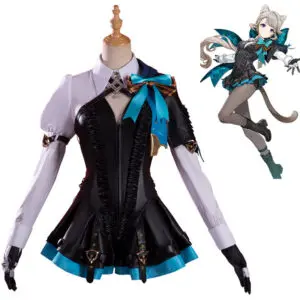
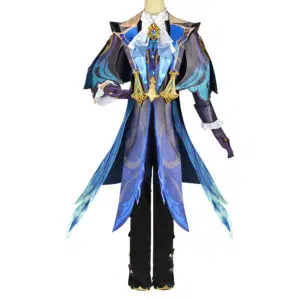
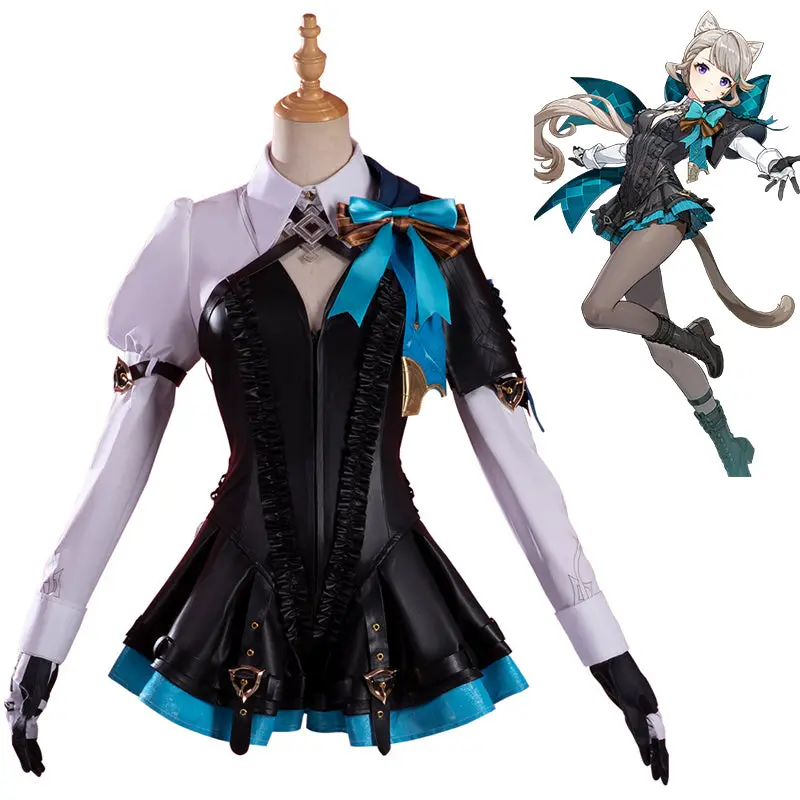
Imagine two friends planning a fantasy-inspired paired cosplay photograph. One is considering the Genshin Impact Lynette Cosplay Costume Magician Assistant Dress Halloween Party Suit, while the other is considering the Genshin Impact Neuvillette Cosplay Costume. These are their individual costume candidates, not evidence that the two listings form a matching set.
Initial status: both friends have chosen their respective costume references, but they have not agreed on how the finished photograph should connect the two appearances. Their first idea is to purchase additional matching clothing so that the pair looks more coordinated. However, neither person wants to lose the identity of their chosen character.
They write a shared creative brief: the photograph should communicate a connected fantasy-inspired theme while allowing each person to remain recognisable through their own costume interpretation. They identify a restrained shared colour direction as their visual anchor, rather than demanding identical outfits.
New information: after comparing their intended costume references side by side, they decide that the individual costume silhouettes and character presentations are important to the result. They also realise that the shared colour direction can be treated as a photographic styling choice rather than a requirement to buy additional matching clothing.
Resulting status: both costume choices remain individually defined, the shared visual anchor has been selected, and neither person has an unresolved clothing purchase required to create the intended connection.
Decision: choose complementary contrast. They keep their respective costume plans and use the agreed colour direction when planning the paired photographs. They do not purchase extra matching garments because those additions would solve a problem their revised visual brief no longer has.
- Person one: Genshin Impact Lynette costume candidate.
- Person two: Genshin Impact Neuvillette costume candidate.
- Initial problem: no agreed visual connection.
- New information: a shared colour direction can connect the pair without replacing individual costume identities.
- Final decision: complementary contrast, with no additional matching clothing purchase.
Use a side-by-side photograph plan before adding anything
Your final check should be a simple comparison of the two complete outfit references. Place the images beside each other and assess the overall impression before concentrating on individual details.
First, look at the pair from a distance. Is the shared anchor noticeable? Next, look at each outfit separately. Can you still identify the visual direction each person chose? Finally, consider the intended photograph composition. Decide whether the people should stand together, face one another or occupy different positions that make the connection clearer.
If the shared anchor disappears, adjust the creative direction before shopping for more clothing. You might choose a more visible common colour family or simplify the individual styling. If the costumes already look connected, stop adding requirements.
A successful paired cosplay does not need two copies of the same outfit. It needs a clear reason for the costumes to appear together and enough individual character identity for both people to enjoy their own interpretation. Let that relationship guide your final styling decisions.
EXPLORE THE COSTUMES
Mentioned in this guide
View the current options, size information and selected price on each product page.