Sharing a Cosplay Wardrobe: Decide Which Costume Pieces Can Be Used by Multiple People
Two cosplayers want to draw from the same wardrobe, but shared inspiration does not automatically mean shared ownership or permission. Use a wearer-assignment matrix to decide which pieces can be shared and which should remain individually reserved.
Sharing a cosplay wardrobe with friends can sound like an easy way to explore more character interpretations without everyone independently collecting every piece of clothing. However, a costume that belongs to one person does not automatically become available to everyone else simply because the group likes the same character or has similar creative interests. One person might want to reserve an entire outfit, while another hopes to use selected garments in a different interpretation. The solution is not to assign the whole wardrobe to everyone. Instead, make a wearer-assignment matrix that records who wants to use each piece, who has approved that arrangement and whether another person already has a commitment to it. This makes sharing an intentional decision rather than an assumption. Most importantly, it allows people to collaborate without losing control over their individual costume choices.
Separate wardrobe ownership from creative interest
Start by identifying the existing costume pieces that people are discussing. Write down the complete costume name, its owner and the individual garments that are actually being considered for shared use. Do not begin with a general statement that everyone can use the same character wardrobe.
There is an important difference between liking the same outfit and having permission to wear it. Two friends might independently enjoy a particular character, but that shared interest does not establish that either person has agreed to share clothing.
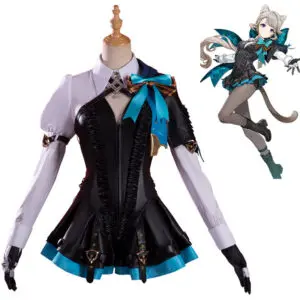
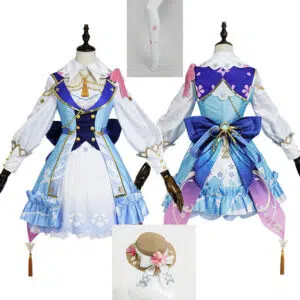
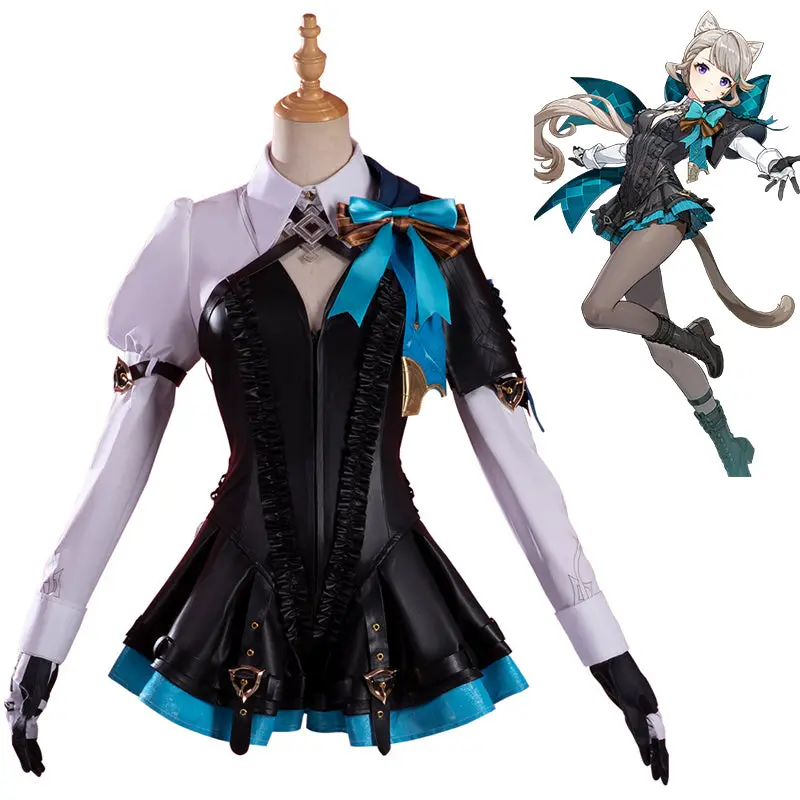
For example, the HEROCOS Genshin Impact Lynette Cosplay Costume Magician Assistant Dress Halloween Party Suit and the HEROCOS Genshin Impact Kamisato Ayaka Cosplay Costume Springbloom Missive Lolita Dress Suit With Straw Hat can serve as separate illustrative costume references when discussing wardrobe planning. Their listing titles identify different costume subjects, but they do not establish that either outfit is available for shared use.
Create a starting inventory with one row per existing piece. Record its owner before considering any proposed wearer. This simple separation prevents the group from confusing a creative suggestion with an authorization to use somebody else's clothing.
Build a wearer-assignment matrix for individual pieces
Create one column for each potential wearer and one row for every costume piece under consideration. A complete outfit can have several rows because different people may have different preferences about individual garments.
For each proposed assignment, record four things: whether the person independently wants to use the piece, whether it suits their intended creative brief, whether they have personally approved the arrangement and whether another wearer already has an existing commitment to it.
The creative brief matters because a garment can be interesting without actually contributing to the appearance someone wants. Ask each person to describe the role they expect the piece to play rather than simply ticking a box because they like the character.
Do not allow one participant to approve an arrangement on behalf of another. The person who owns a piece controls permission to share it, and each proposed wearer must independently want the assignment. If either decision is missing, leave the assignment unresolved.
- Piece: identify the exact garment or costume component.
- Potential wearer: record each person separately.
- Personal interest: does this wearer actually want to use it?
- Creative purpose: does the piece contribute to their intended appearance?
- Approval: has the owner and the proposed wearer explicitly agreed?
- Existing commitment: has another wearer already reserved the piece?
Classify each piece as reserved, shared or unresolved
After filling in the matrix, give each piece one of three overall classifications. Individually reserved means the item remains assigned to one person and is not available for other wearers. Approved for shared use means the owner and every affected wearer have agreed to the proposed arrangement. Unresolved means at least one important permission or assignment question remains unanswered.
These categories should apply to individual pieces rather than automatically to an entire costume. For example, the owner might be willing to share one garment while reserving the remaining outfit. Another piece might be unsuitable for a particular person's creative brief even though the owner is happy to share it.
An item that does not suit one wearer's concept is not necessarily useless to the whole group. Record the specific assignment that failed rather than marking the garment as unsuitable for everyone.
Only move a piece into the shared category when every affected person has approved the arrangement. If somebody changes their mind, revisit that row and update the assignment. Previous permission should not be treated as an obligation to continue sharing indefinitely.
- Individually reserved: one designated wearer; no shared permission.
- Approved for shared use: every affected person has agreed.
- Unresolved: ownership, interest, suitability or approval needs clarification.
Worked hypothetical case: two friends consider a shared Lynette costume
Imagine two friends planning separate Genshin Impact cosplay appearances. They are considering the HEROCOS Genshin Impact Lynette Cosplay Costume Magician Assistant Dress Halloween Party Suit as a reference for a possible shared wardrobe arrangement.
Initial status: Friend A owns the complete costume and wants to reserve it for their own character portrayal. Friend B is interested in using selected clothing pieces for a separate creative interpretation. No shared-use permission has been granted.
They create a wearer-assignment matrix with two columns, one for each friend. They distinguish the complete costume from the individual clothing pieces being discussed. Friend A records a reservation against the complete outfit. Friend B records an interest in selected garments, but interest alone does not create an approved assignment.
New information: Friend A confirms that they do not want the main garments shared and explicitly reserves the complete outfit for their own use. Friend B reviews their creative brief and decides that using somebody else's reserved clothing is not necessary to the concept they want to develop.
Resulting status: the complete costume is classified as individually reserved for Friend A. Friend B's proposed use remains unapproved, and the friends remove the costume from the shared-wardrobe proposal. Neither person assumes that the original conversation created permission.
They then consider three possible routes. Route one is unchanged reuse: Friend B wears the existing costume as originally intended by Friend A. This fails because Friend A has not authorized that use. Route two is restyling: Friend B uses selected pieces from the same costume in a different interpretation. This also fails because the owner has reserved those pieces. Route three is an independent costume: Friend B develops a separate outfit using clothing they own or independently select. This route avoids the unresolved ownership issue.
Final decision: Friend A keeps the complete costume individually assigned, and Friend B develops an independent outfit. The friends can still share creative ideas and plan their appearances together, but they do not classify another person's clothing as communal wardrobe property. The decision preserves both people's creative independence without depending on permission that was never granted.
Choose the wardrobe structure that everyone actually approves
Once the matrix is complete, review the proposed wardrobe as a collection of individual assignments. Look for garments that have clear owners, approved wearers and an agreed creative purpose. These can form the genuinely shared portion of the wardrobe.
Keep individually reserved pieces in a separate category. They can still inspire another person's styling decisions, but inspiration should not be confused with permission to use the physical garment.
For unresolved pieces, identify the exact person whose decision is needed. Ask them directly rather than allowing the group to vote on somebody else's ownership boundary. If approval is not forthcoming, leave the item outside the shared wardrobe.
Finally, record the agreed arrangement in a document everyone can consult. Update it whenever a person changes their intended character, no longer wants to share a garment or makes a new reservation.
The most useful shared wardrobe is not necessarily the one containing the greatest number of costumes. It is the one in which every participant understands which clothing they can use, which items belong to somebody else's individual plan and which proposed arrangements still need permission. That clarity makes creative collaboration easier without turning personal costumes into assumed group resources.
EXPLORE THE COSTUMES
Mentioned in this guide
View the current options, size information and selected price on each product page.